
Taking control of exposure for creative effects is one the pure joys of photography. Neutral density filters are one tool you can use to control exposure in their ability to reduce the amount of light that enters the lens.
We’ve explained what neutral densities filters are and how to use them, but sometimes you want a more compact, all-in-one solution that lets you explore the effects of an ND filter at a range of different densities. This is when you might want to consider buying a variable ND filter.
What is a variable ND filter?
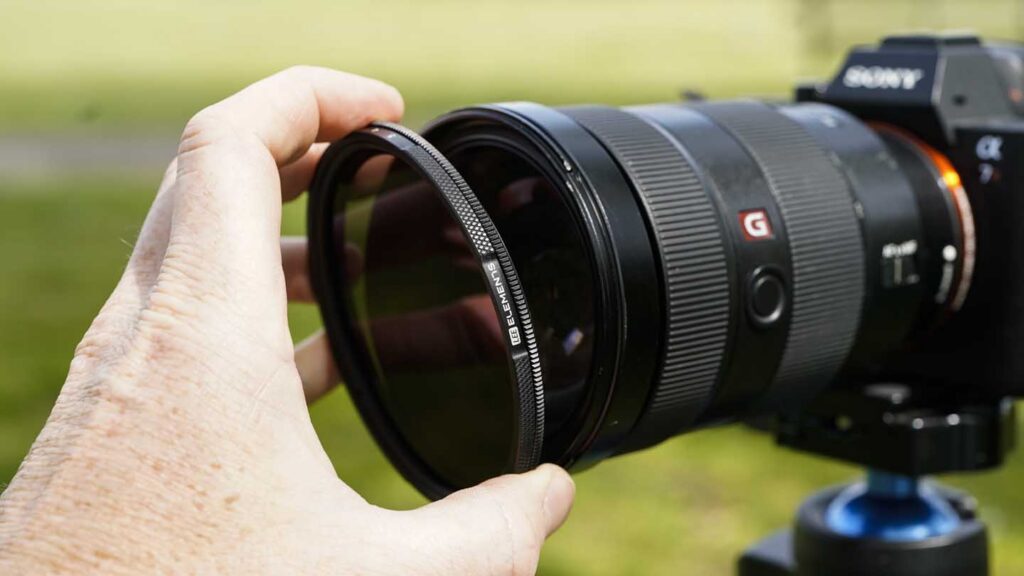
A variable ND filter is a neutral density filter that allows you to adjust the density of the filter. Typically you twist a ring on the outside of the filter, and the filter shifts between low and high densities (often anywhere from 2 up to 10 stops of light).
When to use a variable ND filter
It’s best to use an ND filter or variable ND filter when you are shooting in strong daylight or other bright conditions and want to shoot with a wide aperture, for instance, to create a shallow depth of field effect. Without an ND filter in this situation you will probably blow out your exposure. An ND filter helps reduce the light coming into your lens, allowing you to shoot at f/2.8, for example, at a reasonable shutter speed.
You might also use an ND filter if you were shooting the sea, for instance, and wanted a daytime long exposure to smooth out the water for that classic milky sea effect. In the daylight you won’t be able to get an exposure long enough to flatten the waves. An ND filter, again, reduces the light hitting your sensor allowing you to shoot at a longer exposure.
When to use a variable ND filter in particular? Variable ND filters are useful because you have control over its opacity. Using our beach example again, if you are photographing a sunset, the light levels will change dramatically over a short period of time. A variable ND filter allows you to keep adjusting the opacity until you no longer need it.
Variable ND filters are also useful for videographers. Say you were filming someone speaking on a street corner and then panned over to a commotion taking place in a dark alley. A variable ND filter lets you seamlessly move your camera from brighter to darker scenes while maintaining the same depth of field in your shot.
Do ND filters affect image quality?
This is a common question, and the answer is no: ND filters will not affect image quality. ND filters only limit the amount of light reaching your camera’s sensor via the lens. You do this in order to get a longer shutter speed. Provided your camera is stable, it will produce sharp, detailed images with an ND filter mounted.
Some of the questions around image quality with ND filters might come down to confusion with colour filters and gels, which can affect your image quality.
How to know when you’ve pushed a variable ND too far
While variable ND filters offer tons of flexibility, sometimes you can push them too far. You’ll know when you’ve done this if you see a funny dark cross in the centre of your scene if you try to darken the image too much – this is a feature of using two sheets of polarising material. And if you use them with a very wide lens there can be variation in the effect across the frame.
What’s more, if you pan in video, the effect may change because polarising filters work best when the sun is to the side of the frame.
Variable ND vs fixed ND filter – what are the differences in image quality?
There are, however, some subtle differences in image quality between variable ND filters and traditional fixed ND filters.
Stills shooters looking for big-resolution, high-quality images (think landscape photographers) will typically opt for a fixed ND filter. Videographers or photojournalists and street and travel photographers might opt for a variable ND filter.
In most instances, a variable ND filter will deliver the image quality you want. But in a few conditions it can struggle.
With reflective surfaces, for instance, a variable ND filter may produce odd tones as you change the strength.
There’s also the issue that with a variable ND filter you are shooting through more layers of glass than you are with a fixed ND filter. This means you can sometimes get softer images.
Then again, with a variable ND filter you might find that you get shots you wouldn’t ordinarily be able to achieve because you don’t have a full set of filter or the time to keep changing them one-by-one.
In short, a fixed ND filter will deliver higher quality images, while a variable ND filter offers far more speed, flexibility and convenience. A variable ND filter will also save you a lot more money in the long run than buying lots of fixed ND filters at different strengths.
Is a variable ND filter a polarizer?
In a word, no. We get this question a lot, and it’s a common misconception, but a variable ND filter is very different from a polarizer filter.
As its name suggests, a polarizer filter removes the polarizing light from a scene, such as glare and reflections. And by doing this you’ll get stronger, more saturated colours. The most common result is a deeper blue sky.
A variable neutral density filter, as we’ve alluded to elsewhere in this guide to the best variable ND filters, controls ALL of the light that enters your camera. Unlike a fixed ND filter that reduces light levels by a stop, a variable ND filter allows you more control over these light levels that you want to block from your sensor.
What is the best variable ND filter?
Variable ND filters come in a range of sizes and price points. To help you choose, we’ve rounded up seven of the best variable ND filters for your needs, from the high end to the budget options.