
From smartphones to mirrorless masterpieces, these are the current cameras that shoot 4K video at 120fps
Looking for the best cameras that can shoot 4K video at 120fps in 2026? As frame rate technology advances, the ability to record high-resolution slow motion is no longer limited to expensive cinema rigs. Whether you are a professional filmmaker needing uncropped 4K 120p for a commercial, or a content creator looking for an action cam to capture smooth B-roll, the market has shifted dramatically this year.
In this guide, we have tested and ranked the top options available right now—ranging from the latest high-end mirrorless flagships to compact action cameras—to help you find the perfect tool for your workflow.
Why Shoot 4K at Higher Frame Rates?
Shooting 4K at 120fps (frames per second) is the gold standard for cinematic slow motion. It allows you to slow your footage down to 20% or even 25% speed while maintaining a high-resolution, crystal-clear image. Unlike 60fps, which offers only half-speed playback, 120fps provides that “floating” quality essential for fast-moving subjects, sports, and emotional wedding videography.
Top Hybrid Mirrorless Cameras (The Heavy Hitters)
These cameras offer the best balance of image quality, autofocus, and professional codecs.
1. Nikon Z8 The “Baby Z9” is arguably the most complete hybrid camera available today. It shoots uncropped 4K 120fps and even 8K 60fps without a mechanical shutter, meaning zero vibration and silent operation. It supports internal 12-bit N-RAW recording, giving colorists immense flexibility.
- Best For: Professionals who need everything in one body (stills + cinema video).
- Key Spec: Uncropped 4K 120p, Internal RAW.
2. Canon EOS R5 Mark II A massive upgrade over the original R5, this model fixes the overheating issues and introduces “Action Priority” autofocus, which uses AI to predict where athletes will move next. It shoots 4K 120fps uncropped and includes Canon’s renowned color science.
- Best For: Wedding and event shooters who need reliable, beautiful skin tones.
- Key Spec: 45MP sensor, Uncropped 4K 120p, Improved heat management.
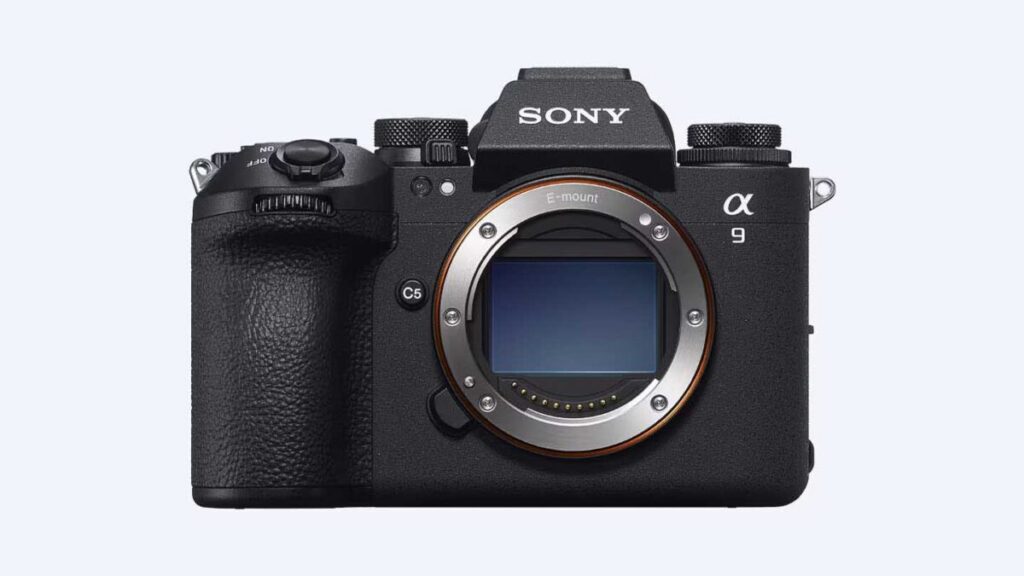
3. Sony Alpha 9 III This is the world’s first full-frame camera with a Global Shutter. This means when you shoot 4K at 120fps (or even higher), there is zero rolling shutter distortion. Fast-moving golf clubs, bat swings, or panning shots will look perfectly straight, not bent or “jello-like.”
- Best For: High-speed sports and action where motion accuracy is critical.
- Key Spec: Global Shutter (Zero distortion), 120fps burst stills.
4. Panasonic Lumix GH7 The king of Micro Four Thirds. It now features Phase Hybrid AF (finally fixing the focus hunting of previous models) and supports internal ProRes RAW. While the sensor is smaller, the stabilization (IBIS) is the best in the industry, making handheld 120fps shots look like they were filmed on a gimbal.
- Best For: Run-and-gun filmmakers and budget-conscious pros.
- Key Spec: Internal ProRes RAW, 32-bit float audio, Best-in-class IBIS.
5. Fujifilm X-H2S The best APS-C option for video. Its “Stacked” sensor allows for incredibly fast readout speeds, minimizing rolling shutter. It shoots 4K 120fps with a manageable 1.29x crop and supports “Open Gate” recording, which is perfect for cropping vertical social media clips later.
- Best For: Content creators who want “film-like” colors straight out of camera.
- Key Spec: Stacked Sensor, Open Gate 6.2K, Excellent film simulations.
Best Action Cameras for shooting 4K 120fps
If you need 4K 120fps that fits in your pocket or mounts to a helmet, these are the 2026 leaders.
1. DJI Osmo Action 5 Pro Currently the battery life king. It uses a large 1/1.3-inch sensor that performs better in low light than most competitors. It shoots 4K 120fps in a 4:3 aspect ratio, giving you more vertical room to crop for TikTok/Reels later.
- Best For: Low light action, water sports (waterproof to 20m), and long battery life.
2. GoPro Hero 13 Black The versatile creative tool. The Hero 13 introduces the HB-Series Lenses (Macro, Ultra Wide, Anamorphic) which the camera auto-detects. It shoots 5.3K at 60fps and a crisp 4K at 120fps with HyperSmooth stabilization that is still the industry benchmark.
- Best For: POV shots and users who want interchangeable creative lenses.
If you are deciding between the top two, the Nikon Z8 offers the most professional video tools (like waveform monitors and internal RAW) for the price, while the CanoWhile the Canon EOS R5 Mark II retains a slight edge in autofocus reliability for tracking erratic human movement, the Nikon Z8 has largely closed the gap with recent firmware updates. Ultimately, your choice may come down to glass. For 4K 120fps slow motion, you need lenses that transmit enough light (at least f/2.8) and focus instantly without ‘breathing.’ Below are the top lens pairings for each system to get the most out of their high-frame-rate modes.”
The Best Lenses for 4K 120fps (2026 Picks)
For Canon R5 Mark II: The “Do-It-All” Hybrid
Canon RF 24-105mm f/2.8L IS USM Z This lens is a game-changer because it combines the reach of a standard kit lens with the low-light capability of a pro zoom.
- Why for Slow Motion? 4K 120fps requires a fast shutter speed (1/250th), which eats up light. The constant f/2.8 aperture ensures your footage doesn’t get grainy, while the huge zoom range means you don’t have to stop shooting to change lenses during an event.
- Key Feature: It supports the optional Power Zoom Adapter, allowing for smooth, broadcast-style zooms that are impossible to do by hand.
For Nikon Z8: The New Standard
Nikon NIKKOR Z 24-70mm f/2.8 S II Updated in late 2025, this “Mark II” version was built specifically with video in mind.
- Why for Slow Motion? It features a de-clickable aperture ring, allowing you to adjust exposure smoothly without sudden jumps in brightness. It is also significantly lighter than the previous version, making it much easier to balance on a gimbal for those buttery slow-motion walking shots.
- Key Feature: “Silky Swift” VCM autofocus motor is silent and instant, ensuring your subject stays sharp even at 120fps.
Why Shoot Video at High Frame Rates? In recent years, shooting 4K video at 60fps has become the baseline for many photographers and filmmakers. As technology has advanced in 2026, the demand has shifted toward cameras that can capture 4K at 120fps. But why is this leap in frame rate so important?
Benefits of Shooting 4K at 60fps Shooting at 60fps allows you to slow down footage to 50% speed, creating a smooth, scene-setting slow-motion effect. When you output this footage at the standard playback frame rate of 29.97fps (or 30fps), you can seamlessly mix 60fps B-roll with your standard real-time footage.
This method lets you stretch one second of reality over two seconds of screen time—perfect for emphasizing a smile or a product detail. In contrast, slowing down standard 30fps footage results in a choppy, staccato appearance (dropping to 15fps), which looks unprofessional in high-resolution 4K.
Why Not Always Shoot at 60fps? While filming everything at 60fps offers flexibility in post-production, it isn’t a “set it and forget it” solution.
- The “Soap Opera” Effect: For standard playback, 60fps can look hyper-realistic and unnatural, lacking the cinematic motion blur audiences expect from 24fps films.
- Lighting & Shutter Speed: To maintain natural motion at 60fps, you need a shutter speed of roughly 1/120th of a second. This requires twice as much light as shooting at 30fps, which can degrade quality in dim environments.
- Data bloat: 4K 60fps files are massive, filling memory cards and hard drives twice as fast.
Advantages of Shooting 4K at 120fps Filming at 120fps is the game-changer for modern content creation. At this frame rate, you can slow footage down to 20% or 25% speed, transforming fast, chaotic action into fluid, dreamlike sequences.
This capability is essential for:
- Emotional Storytelling: Slowing down confetti throws at weddings or subtle expressions in portraits.
- Action Sports: Analyzing fast movements (like a golf swing or skate trick) with crystal-clear detail.
- Speed Ramping: The popular editing technique where a clip speeds up and slows down requires the extra data of 120fps to remain smooth during the slow segments.
For more detailed insights into the benefits and uses of high frame rate shooting, check out these articles on Camera Jabber:
Understanding the advantages of shooting at different frame ratesificantly enhance your filmmaking skills and help you achieve the desired cinematic effects.
The benefits of shooting 4K video at high frame rates
How to get the best out of your high frame-rate footage
Using the 180-Degree Shutter Rule Before you switch your camera to 60fps or 120fps permanently, it is crucial to understand the 180-degree shutter rule. This rule of thumb dictates that your shutter speed should always be double your frame rate to maintain natural-looking motion blur.
For example, when shooting at a standard 30fps (or 29.97fps), you set your shutter speed to 1/60th of a second. This is relatively easy to expose for, allowing you to find a balance of ISO and Aperture even in moderate light.
The “Light Trap” of High Frame Rates When you crank your frame rate up to 60fps, the rule demands a shutter speed of 1/120th. At 120fps, you need a blistering 1/250th of a second.
This creates two distinct problems:
- Loss of Light: A shutter speed of 1/250th lets in significantly less light than 1/60th. You will often need to bump up your ISO (introducing noise) or open your aperture wide just to get a proper exposure.
- The “Staccato” Look: Shooting at high shutter speeds freezes action perfectly, eliminating the natural motion blur our eyes expect to see. Without this blur, standard-speed playback can look jittery and hyper-realistic—often called the “Gladiator” or “Saving Private Ryan” effect.
Motion blur is vital for the “persistence of vision” that makes video look smooth. If you shoot everything at high frame rates but play it back at normal speed without slowing it down, your footage may lack that cinematic, fluid feel. For more on this, read our guide on what shutter speed to use for filming moving subjects.
When to Break the Rule If you plan to slow the footage down in post-production, high shutter speeds are actually beneficial because they ensure each frame is crisp. However, if you are shooting a standard interview or vlog, stick to 24fps or 30fps. Using 60fps or 120fps incorrectly can turn a romantic scene into something that looks like a high-speed sports broadcast.
Why Shoot 4K at 120fps?
Recording 4K at 120fps is a specialized tool, but for capturing fast action or emotional slow motion, it is an indispensable feature. However, before you hit record, you need to understand the massive data demands this mode places on your camera and storage.
The Reality of Data Rates (Bitrate) When looking at cameras that shoot 4K at 120fps, the most critical spec to check is the bitrate—usually measured in megabits per second (Mbps).
In the early days of 4K, 100Mbps was the standard. In 2026, however, high-quality 4K 120fps often demands 200Mbps, 400Mbps, or even higher.
- Compression Matters: Most mirrorless cameras use VBR (Variable Bit Rate) to manage this flow. If the bitrate were fixed (CBR) at a high quality, your files would be unmanageable.
- How VBR Works: The camera analyzes every frame. If you are shooting a static interview, the camera compresses the data because little is changing between frames (recording fewer megabits). If you are shooting a chaotic football game, the camera ramps up the bitrate to capture the complex motion.
Why Higher Bitrates Matter for Slow Motion If you shoot 4K 120fps at a low bitrate (like 100Mbps), you are starving the image of data. When you slow that footage down 4x or 5x, you might see “artifacting” or blocky pixels, especially in complex textures like water or confetti.
Storage Implications
- SD Cards vs. CFexpress: The old “V90” SD cards often cannot keep up with the data rates of modern 4K 120fps (especially in ProRes or RAW). You will likely need CFexpress Type B or Type A cards to sustain the sustained write speeds required.
- Heat & Processing: Processing 120 high-resolution frames every second generates significant heat. This is why newer models like the Canon R5 Mark II and Nikon Z8 feature advanced heat dissipation designs compared to their predecessors.
4K at 120fps is amazing, but it requires a holistic upgrade to your workflow. You need a camera that can process it, cards that can write it, and a computer that can edit the massive files it creates.
Which cameras shoot 4K at 120fps?
Now that we’ve explained what shooting 4K at 120fps allows you to do, let’s take a look at what cameras are capable of doing this. For a deeper dive into the many different camera types and features available, check out our range of camera buying guides.